Buying a mountain home in Evergreen feels like stepping into a postcard, but the terrain, snow, and code environment demand a smarter playbook than in the lowlands. You want comfort, safety, and long-term value without surprises after closing. In this guide, you’ll learn the key site, structure, and systems differences that set Evergreen homes apart, plus the due-diligence steps that protect your purchase. Let’s dive in.
Evergreen mountain factors
Evergreen spans multiple jurisdictions. Some properties sit in Clear Creek County while others are in Jefferson County, and that split affects permits, inspections, and design values. Your first step is to confirm which county governs your parcel. For homes in the Evergreen area of Clear Creek County, start by verifying jurisdiction noted by the county and local resources such as the tourism overview for unincorporated Evergreen inside Clear Creek County. You can confirm the distinction by reviewing the county’s Evergreen references on Visit Clear Creek’s page for the area’s towns and geography. See the Evergreen area overview.
Elevation brings colder winters, frequent freeze–thaw cycles, and more snow than Denver. Published averages help, but they mask big microclimate swings. Treat any average as a starting point, then rely on parcel-specific design snow-loads when evaluating roof framing and decks. A quick snapshot of climate context is available in the Evergreen climate summary.
Building codes influence details. Clear Creek County has adopted the 2021 ICC code series, which changes requirements for structure, energy, and life safety. Always verify the currently enforced edition and any local amendments before planning work or evaluating recent renovations. You can review the county’s adoption notice in the Clear Creek code adoption update.
Colorado also requires jurisdictions updating codes to move to the 2021 IECC or equivalent, with electric and solar-ready provisions. That affects new construction and many major remodels. Learn more in the state energy code overview.
Site and siting essentials
Confirm jurisdiction and mapping
Start by confirming the county for the parcel and pulling the county file. Snow-load and wind-load maps, permit history, and environmental health rules are county specific. Clear Creek provides permit types, road and driveway guidance, and site-development requirements through its portal. Review the Clear Creek permits and development page and the county Building FAQ, which includes parcel snow-load lookup and septic notes. Reference the Clear Creek Building FAQ.
Geology, slope, and drainage
Evergreen’s foothills are rocky and variable. Shallow bedrock, boulders, and mixed soils change how foundations, retaining walls, and drainage are designed. On sloped or previously filled sites, a geotechnical investigation is standard and often required. The USGS mapping for the Evergreen quadrangle captures the complex geology you may encounter. See the USGS geologic map description.
Orientation matters. South-facing driveways may shed snow faster, while shaded aspects can hold ice for weeks. Steep slopes and gullies concentrate runoff, so a drainage plan that carries water away from the foundation is critical.
Foundations and structure
Common mountain foundations
- Drilled piers or caissons: Reach competent rock where shallow bedrock prevents conventional spread footings. These are common in rocky terrain.
- Engineered retaining systems: Reinforced retaining walls or soil nails are used where cuts and fills create height differences. They require engineering and permits.
- Walk-out basements: Stepped foundations and partial exposure reduce earthwork and can create great lower-level living space, but they require robust waterproofing and positive drainage.
Snow and lateral loads
Design snow-loads vary by elevation, exposure, and roof geometry. Valleys and low-slope roofs can collect drifts that increase loads. Large overhangs and elevated decks change load paths and should be reviewed by a structural engineer. Clear Creek provides guidance and parcel lookup in its Building FAQ. Use these design values to frame roof condition and future upgrade decisions.
When to order geotechnical work
If the lot is sloped, has visible fill, has rock outcrops or seepage, or shows settlement cracks, require a geotechnical report early. Counties frequently require geotech and engineered grading plans for new builds and major site work. The county FAQ outlines expectations and helps set your timeline.
Envelope and systems
Roofing and ice management
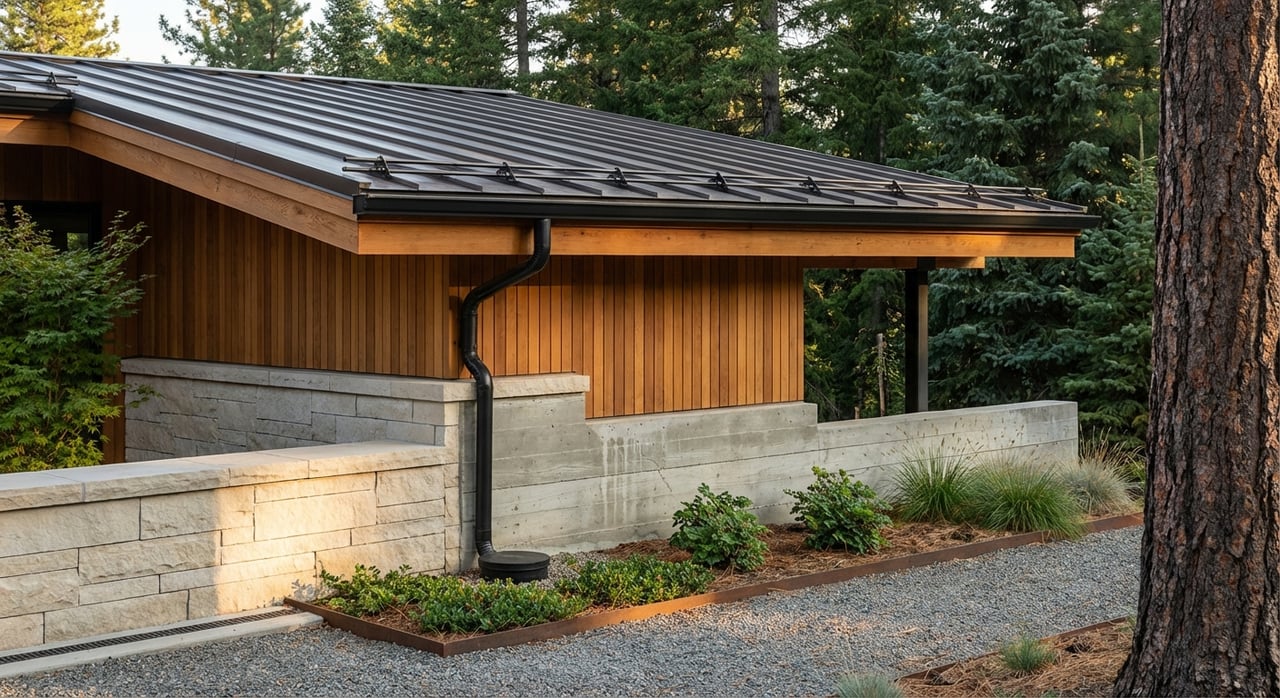
At elevation, roofs work harder. Clear Creek’s permit procedures point to Class A roof coverings and ice-barrier underlayment details for re-roof projects. You can review permit intake materials that reference these standards in the county mechanical and building permit resources. Many mountain homes add snow retention hardware over entries and along walks to manage sliding snow.
Preventing ice dams starts inside. The best defense is tight air-sealing at the ceiling plane, right-sized insulation, and balanced ventilation that keeps the roof deck cold. Then add ice-and-water shield at eaves and consider heat trace only as a targeted backup. For a deeper dive on these principles in snowy climates, see the technical roof ventilation guidance.
Siding, decks, and wildfire
In treed foothill areas, materials and details that reduce ember ignition matter. Noncombustible or ignition-resistant cladding near grade, tight vent screens, careful deck detailing, and Class A roofing all contribute to resilience. Jefferson County’s Wildland-Urban Interface rules include defensible-space permitting for projects in overlay areas, and Clear Creek runs similar programs. Review WUI and defensible-space expectations in Jefferson County’s planning FAQs and confirm specific requirements with the governing county for your parcel.
Windows, insulation, and HVAC
High R-value walls and roofs, continuous air barriers, and attention to thermal bridges control condensation and improve comfort. At elevation, HVAC sizing must account for lower air density. Radiant hydronic floors are popular for steady, even heat across multi-level plans, but all system choices should align with current energy codes and your home’s envelope. For statewide code direction, refer to the energy code status summary.
Utilities, access, and permits
Wells and septic systems
Many mountain homes use private wells and onsite wastewater systems. Clear Creek and Jefferson counties require inspections and documentation, often including a use permit at time of sale. Confirm service type early, schedule third-party septic and well inspections, and leave time for county approvals. Start with the Clear Creek Building FAQ for process highlights.
Driveways, roads, and snow removal
Steep or switchback driveways may need engineered plans and county driveway permits, especially where a private drive meets a county road. Road maintenance can involve county and state agencies, so clarify plowing, emergency access, and staging areas up front. Check requirements and permit pathways on the Clear Creek permits page.
Maintenance to plan for
- Roof inspections and snow management each winter, including snow guards and targeted clearing where needed.
- Deck flashing and fastener checks since wet–dry and freeze–thaw cycles accelerate wear.
- Annual well and septic inspections, including water-quality testing for wells.
- Routine defensible-space work around structures in treed areas.
- Re-seal and refinish exposed exterior timbers and beams on a predictable cycle.
Your due-diligence team
- General home inspector: Baseline review of systems, roof, windows, and mechanicals. Use findings to target specialists.
- Structural engineer: Evaluate foundation, framing, and decks for snow and drift loads. Provide stamped recommendations if corrective work is needed.
- Geotechnical engineer: Set footing type and depth, bearing values, drainage guidance, and slope-stability controls. Often required on sloped or filled lots. See the county FAQ for expectations.
- Civil/site engineer: Produce grading, erosion control, and driveway plans required for permits. Consult the Clear Creek permits list for submittal types.
- Septic (OWTS) inspector and environmental health coordination: Confirm inspection and any time-of-sale use permit.
- Well contractor or hydrogeologist: Inspect the well, test water quality, and confirm capacity as needed.
- Roofing specialist and chimney inspector: Verify roof condition, flashing, snow retention, and chimney safety. See permit intake resources for re-roof expectations in the county building portal.
- Energy specialist: Blower-door and infrared scan to identify air leaks and insulation gaps that cause ice dams and high energy use. Align results with the state energy code direction.
Buyer checklist
- Confirm the governing county and pull the parcel’s permit and inspection history. Start with the Clear Creek permits portal and Building FAQ.
- Look up parcel design snow-loads and note roof form features that can drift snow.
- If sloped or rocky, order a geotechnical report early and include a structural review for foundations, roof framing, and decks.
- If on well or septic, schedule third-party inspections and any required use permits at the start of escrow.
- Verify driveway and right-of-way permits, and confirm snow removal and emergency access responsibilities.
- Where WUI rules apply, complete and document defensible-space work and ember-resistant details.
- Align any planned remodel with current 2021 ICC and 2021 IECC expectations. Review the county code adoption update and state energy code summary.
Buying in Evergreen rewards careful preparation. When you assemble the right specialists and anchor decisions to parcel-specific data, you reduce risk and set yourself up for long-term comfort and value. If you would like a construction-informed strategy tailored to your goals, connect with Arn Rasker for a discreet consultation.
FAQs
What makes mountain construction in Evergreen different from Denver?
- Elevation, heavier snowfall, rocky terrain, and county-specific codes change foundation options, roof and deck loading, energy details, and driveway design compared with the plains.
How do county snow-load maps affect my roof evaluation?
- County design snow-loads set the baseline your engineer uses to assess roof framing and drift-prone areas like valleys and low slopes, guiding any reinforcement or re-roof decisions.
Do I need a geotechnical report before I buy a sloped Evergreen home?
- Yes, on sloped or previously filled lots you should order a geotech report early since it informs foundation type, drainage, and slope stability, and it is often required for permits.
What should I know about wells and septic in Evergreen?
- Many properties use private wells and onsite wastewater systems that require third-party inspections and, in some cases, a time-of-sale use permit coordinated with the county.
How can I prevent ice dams on a mountain home roof?
- Focus on air-sealing at ceilings, right-sized insulation, and balanced ventilation to keep the roof deck cold, then add ice-and-water shield at eaves and targeted heat trace if needed.