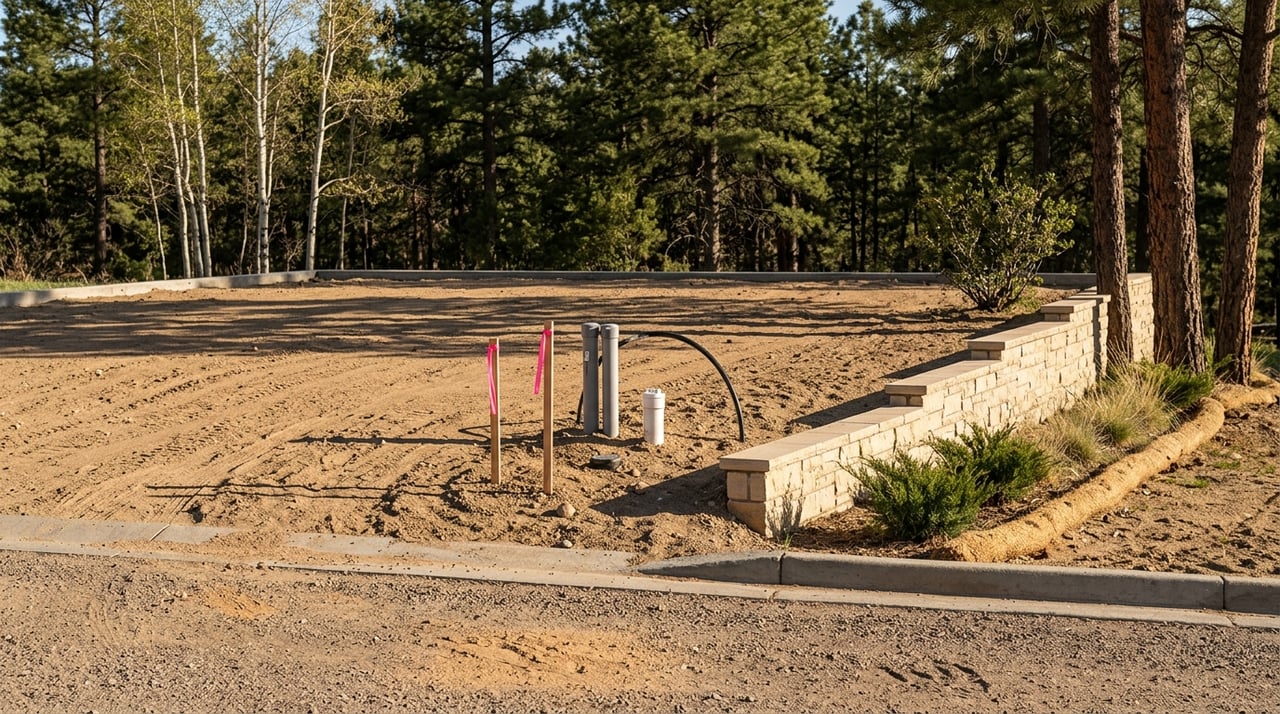
Buying land in Boulder County can look simple at first glance. You see views, privacy, or future potential and start imagining the home or project you could build there. But in this market, buildable land is really a feasibility question before it is a pricing question, and understanding that early can save you time, money, and frustration. If you are evaluating a vacant parcel in unincorporated Boulder County, here is how to think through the process with more clarity and confidence. Let’s dive in.
Start With Jurisdiction First
One of the first questions to answer is whether the property is in unincorporated Boulder County or inside a city or town. That matters because the county land use code applies only in unincorporated areas, and Boulder County has updated its land use code in 2025 along with building code amendments effective March 31, 2025.
If a parcel is in unincorporated county territory, zoning and review standards can be very different from what you might expect inside municipal limits. Boulder County notes that mountain areas are often zoned Forestry, while plains areas are often Agricultural, though other districts also exist. The county recommends confirming zoning through its planning FAQs and Property Viewer resources, or by contacting a planner directly.
Confirm the Parcel Is a Legal Building Lot
A vacant parcel is not automatically a buildable parcel. Boulder County says the land must meet the legal definition of a building lot, and even that status only means the property may be potentially eligible for development. It does not guarantee that a building permit will be issued, as explained in the county’s building lot determination materials.
This is where parcel history becomes especially important. In general, Boulder County states that creating parcels under 35 acres typically requires an official subdivision process, while parcels 35 acres and larger may be divided by deed. Boundary line adjustments also go through formal county review, so you want to understand exactly how the parcel was created before making assumptions about what can happen next.
Review Zoning and Current Size Rules
Zoning tells you more than just whether a home may be allowed. It can shape setbacks, uses, site constraints, and what type of review process may be required. In unincorporated Boulder County, current feasibility can also depend on recently adopted residential size standards.
In April 2025, Boulder County approved new residential size-limit amendments that took effect May 13, 2025. That means custom-home planning or redevelopment analysis should reflect today’s rules, not assumptions based on older projects nearby.
Understand Site Plan Review Early
Many buyers focus on the parcel and the asking price but do not ask soon enough whether the project will trigger a county review process. In Boulder County, Site Plan Review is required for many vacant-parcel projects and for some changes in use, natural areas, rural community districts, and conservation-easement parcels.
The county requires a pre-application conference before filing for Site Plan Review. Some smaller projects may qualify for Expedited Site Plan Review, which the county says is typically reviewed in about 3 to 4 weeks. Even so, expedited review is not available for every site, especially where added constraints are present.
Verify Legal Access Before You Fall in Love
Access can make or break land value. A parcel may look attractive on a map, but legal and physical access are separate questions, and both need to be verified.
Boulder County regulates public and private right-of-way issues through its right-of-way permit system. A driveway connecting to county right-of-way needs an Access Permit, utility work in county right-of-way needs a Utility Permit, and some shared private driveways may require a Construction Permit.
You should also review the county’s official road map, which records road ownership, use, and maintenance. That matters in Boulder County because some local secondary roads can have seasonal winter restrictions, and jeep roads are not maintained for passenger vehicles.
Check Water Availability and Water Rights
Water diligence should happen early, not after you are already emotionally committed. For homes connecting to a water line, Boulder County expects evidence such as a water tap or a commitment letter during building review, according to the county’s residential building permit guidance.
If the property will rely on a well, the Colorado Division of Water Resources handles permits and reviews complete applications before deciding whether a permit can be issued. Boulder County also reminds landowners that private well water is not regulated, treated, or monitored by public health officials, so the owner is responsible for water safety and testing.
Water rights are a separate issue from water supply. Boulder County explains in its water rights overview that Colorado does not maintain a simple ownership registry for water rights, so you cannot assume rights transfer automatically with the land. Deeds and ditch-company records may need to be researched carefully.
Evaluate Sewer or Septic Feasibility
Sanitation is another major filter. If sewer is available nearby, the appropriate sewer agency still has to confirm service. If the property will need an onsite wastewater system, Boulder County Public Health reviews those systems, and not every site will qualify.
The county’s OWTS permit procedures note that some applications may require legal documents such as an easement and maintenance agreement. In practical terms, this means septic feasibility is not just an engineering issue. It can also become a legal and site-planning issue.
Screen Floodplain Risk Early
Floodplain status should be checked before you write an offer or during the earliest diligence period. Boulder County’s floodplain management program uses a regulatory floodplain overlay that combines FEMA and county mapping, and the county updated its regulatory flood-risk zones on October 24, 2024.
If a property is in the floodplain, a Floodplain Development Permit is required before construction. The county also notes that flood risk can exist outside a mapped regulatory floodplain, and floodplain status can affect both lending and insurance requirements.
Consider Topography and Grading Costs
In Boulder County, topography is not just a design issue. It is a feasibility issue that can affect access, drainage, cost, and the amount of usable building area.
The county’s Site Plan Review guidance explains that many mountain properties have steep slopes or poor access, which can lead to erosion problems or wildfire concerns. On plains properties, soils reports may be needed for new residences and commercial buildings, which means even flatter land can come with technical diligence requirements.
Grading and stormwater can also increase costs quickly. Boulder County requires a Stormwater Quality Permit for projects disturbing one acre or more, for some smaller projects that are part of a larger common plan, or for work within 100 horizontal feet of a watercourse. A grading permit is required for grading, excavation, or fill exceeding 50 cubic yards.
Treat Wildfire as a Design Variable
Wildfire should be part of your land evaluation from day one. In unincorporated Boulder County, this is not a niche issue or a remote possibility. It is a major planning and construction variable.
Boulder County states that it is among the top 10 most-at-risk areas for wildfire in the USDA Forest Service’s Rocky Mountain Region, and the county divides unincorporated land into Wildfire Zone 1 and Wildfire Zone 2. The county’s building code amendments apply ignition-resistant requirements to projects in unincorporated areas and include current energy-efficiency and sustainability standards for applications received on or after March 31, 2025.
For buyers, that means the cost and design of a future build may be shaped by wildfire-resistant materials and review requirements. In mountain settings especially, a beautiful site can still be a challenging one.
Build the Right Due Diligence Team
Land purchases in Boulder County usually benefit from a coordinated team. Boulder County notes that professional representation is not required for Site Plan Review, but more complex projects often benefit from architects, planners, attorneys, engineers, and other specialists.
A practical due diligence team often includes:
- A local broker with land and development experience
- A land-use attorney
- A surveyor
- A civil engineer
- A geotechnical engineer
- An architect
- Well, septic, or utility specialists as needed
A survey can be especially important if your future structure may sit close to setback lines, according to the county’s residential permit guidance. The key is sequencing the work well so you are not spending heavily on later-stage design before confirming the basics.
Use a Smarter Evaluation Sequence
The strongest way to evaluate Boulder County land is to move in layers. Instead of asking, “Can I build here?” as one big question, break it into smaller ones and answer them in order.
A practical sequence looks like this:
- Confirm the parcel’s jurisdiction
- Verify zoning and building-lot status
- Review subdivision history and parcel legality
- Confirm legal and physical access
- Check water supply and sanitation options
- Screen floodplain, wildfire, and topographic constraints
- Identify likely permits and review paths
- Assemble specialists before removing contingencies
That process helps you make cleaner decisions and avoid overpaying for land that may be harder or costlier to improve than it first appears.
Why This Matters in Boulder County
Boulder County offers some of Colorado’s most compelling land opportunities, from plains acreage to mountain-view parcels and legacy holdings with long-term potential. But the county’s rules, physical conditions, and layered review environment mean a vacant lot is rarely just a vacant lot.
That is where technical due diligence matters. When you evaluate land through the lens of zoning, access, water, sanitation, floodplain, wildfire, and topography, you can make decisions based on real feasibility instead of assumptions. If you are considering a buildable land purchase in Boulder County and want a technical, market-savvy perspective on what to screen before you commit, connect with Arn Rasker to request a bespoke market consultation.
FAQs
What should you check first when evaluating buildable land in Boulder County?
- Start by confirming whether the property is in unincorporated Boulder County or inside a city or town, then verify zoning and whether the parcel qualifies as a legal building lot.
Does a legal building lot guarantee you can build on Boulder County land?
- No. Boulder County says legal building-lot status may indicate potential eligibility for development, but it does not guarantee a building permit.
Why does access matter for vacant land in Boulder County?
- Legal access affects whether you can reach and improve the property lawfully, and some driveways, shared access routes, and right-of-way work require county permits.
How do water and septic affect buildable land in Boulder County?
- You need to verify whether the parcel can connect to a water or sewer provider or support a well and onsite wastewater system, because not every site will qualify.
How does floodplain status affect land opportunities in Boulder County?
- Floodplain location can affect where and whether you can build, what permits are required, and whether flood insurance may be required by a lender.
What wildfire issues should you evaluate for Boulder County land?
- In unincorporated Boulder County, wildfire exposure can shape construction requirements, material choices, and overall project feasibility because ignition-resistant standards apply countywide.
Who should help with due diligence for Boulder County land purchases?
- Depending on the site, your team may include a local broker, land-use attorney, surveyor, civil engineer, geotechnical engineer, architect, and well or septic specialists.